When Pasadena requires a tree removal permit
Pasadena requires a tree removal permit only for protected trees. Chapter 8.52 protects four groups of private trees, and where they stand on the lot matters:
| Group | Threshold | Where protected |
|---|---|---|
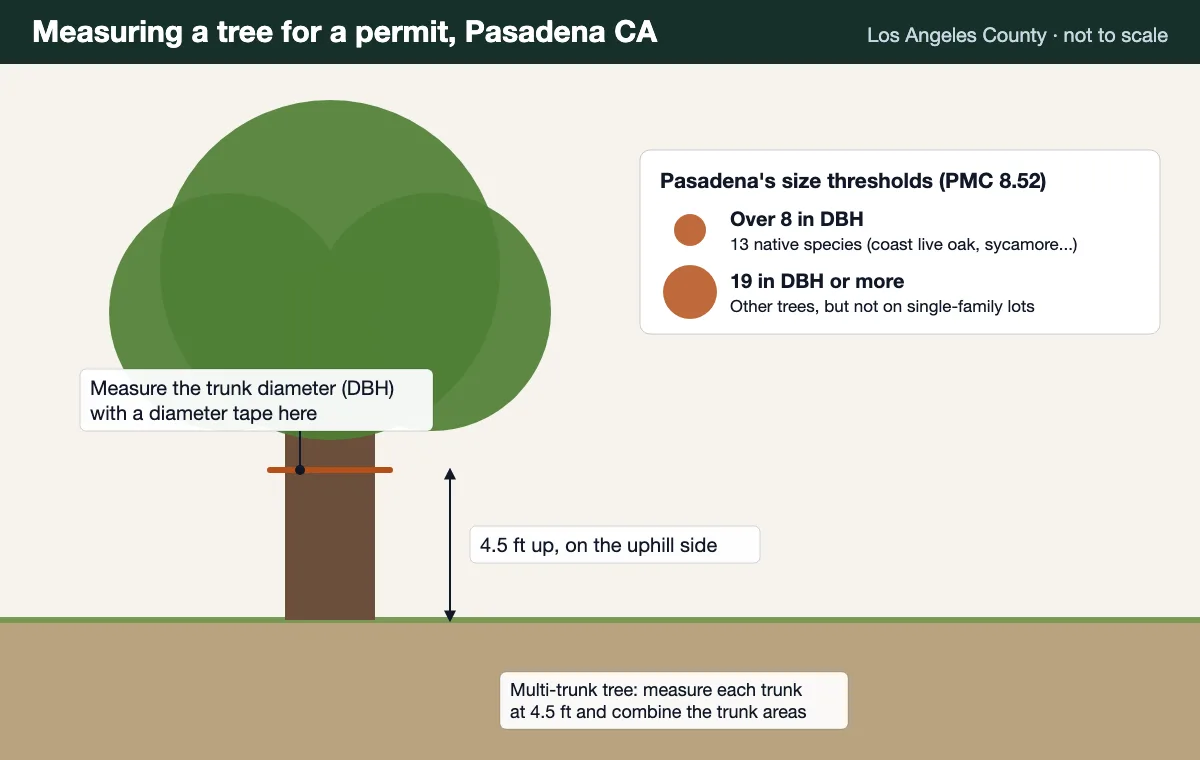
| Native tree (13 species) | Trunk more than 8 in at 4.5 ft | Single-family / RM-12: front yard, required side and rear yards, corner yard. Other zones: anywhere |
| Specimen tree | Species and size on the City's list | Same as natives |
| Landmark or landmark-eligible tree | Designated under Chapter 17.62 | Anywhere |
| Mature tree | 19 in or more, any species | All zones except RS and RM-12 lots |
Swipe the table sideways to see every column →
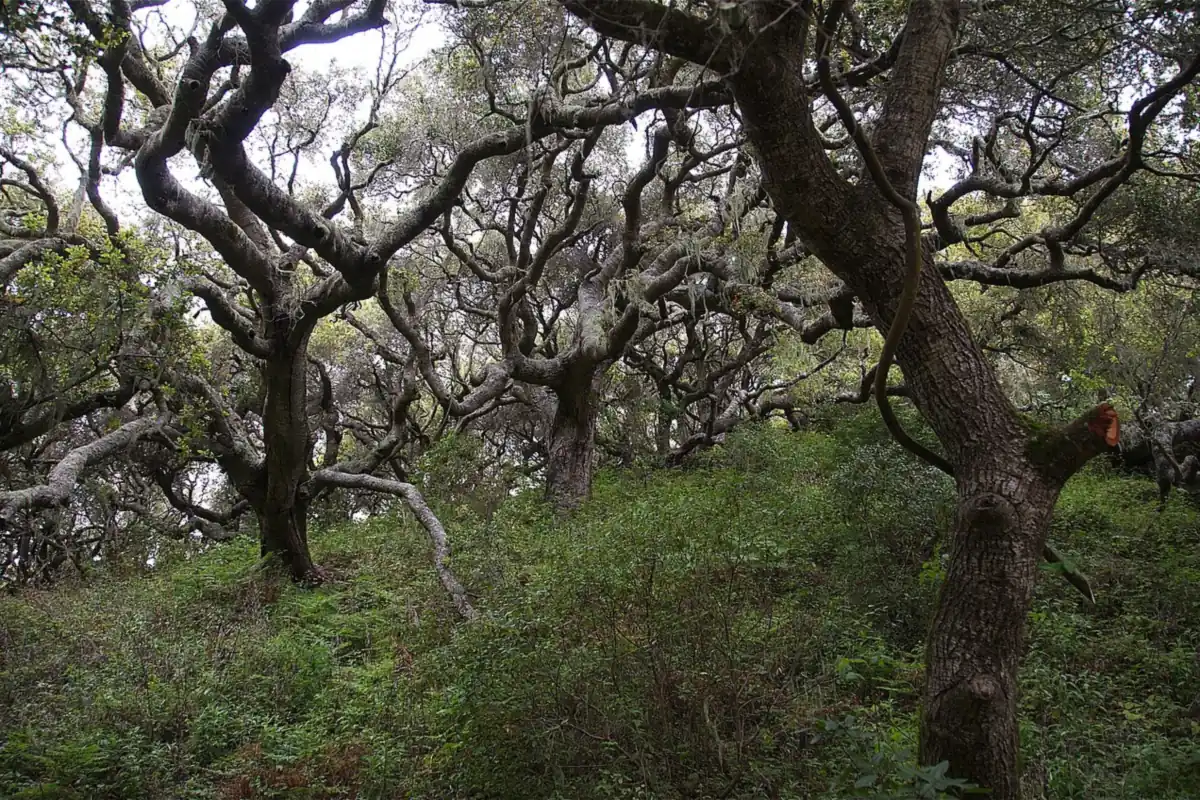
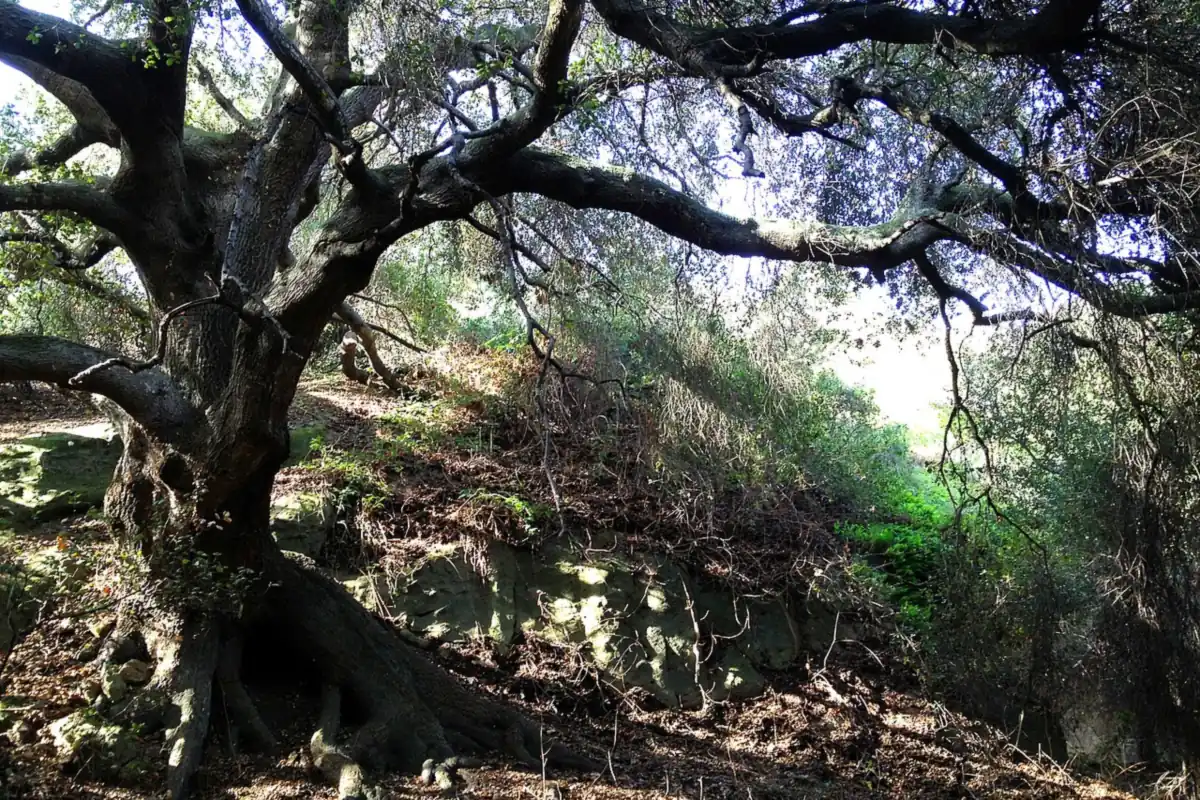
The 13 natives: coast live oak, Engelmann oak, canyon oak, California sycamore, California walnut, scrub oak, valley oak, California bay, Fremont cottonwood, California alder, black cottonwood, arroyo willow, California buckeye.
Trunk diameter (DBH) is measured 4.5 feet above the ground on the uphill side; wrap a tape around the trunk and divide the circumference by 3.14. A multi-trunk tree is measured trunk by trunk and the areas are combined. The Pasadena protected tree list guide covers each group in detail.
How to apply
- 1Confirm the tree is protected
Species, DBH at 4.5 feet on the uphill side, and where it stands on the lot. If it's not protected, no permit is needed.
- 2Gather the application
The City's private tree removal checklist asks for a cover sheet, the Findings for a Private Tree Removal supplement, proof of ownership and at least four photos of the canopy, one from the street.
- 3Add an arborist report (optional, often worth it)
The checklist says a report and tree evaluation form completed by a certified arborist halves the permit fee for single-family uses.
- 4File with the Permit Center
Pasadena's Permit Center is at 175 N. Garfield Ave. If the removal is part of a project that already needs a discretionary planning approval, that application doubles as the tree permit.
- 5Wait for the decision
Within 15 business days after a complete application, or on the date of the related planning decision. The approval may carry conditions, such as replacement trees.
Before relying on the checklist details, confirm them with the City: the fee halving comes from the City's checklist, which we could read only in search excerpts, and fees change each July.
The six findings
The City must deny a removal permit for a protected tree unless it makes at least one of six findings under section 8.52.075 A:
- A public benefit, or a public health, safety or welfare benefit, outweighs keeping the tree
- The tree's present condition means it is not reasonably likely to survive
- An objective feature of the tree makes it unsuitable for protection
- Keeping it would be a substantial hardship to the owner's use of the property
- Denying removal would be a taking of the property
- The project includes a landscape plan that follows the City's replacement matrix (not available for landmark trees)
For a dead or dying tree, the second finding is the usual fit, and an arborist's report documents it. For oaks specifically, see oak tree removal in Pasadena.
Fees
| Fee | FY2026 | FY2027 recommended |
|---|---|---|
| Permit to remove 1 to 3 trees | $1,098 | $1,130 |
| Permit to remove 4 to 12 trees | $1,876 | $1,931 |
| Permit to remove 13+ trees | $3,709 | $3,817 |
| Tree protection plan review | $1,041 | $1,071 |
| Private tree hazard assessment (requested by Planning) | $115.62 | $119.00 |
| 6-month tree protection fencing permit | $169.77 | $174.74 |
Swipe the table sideways to see every column →
FY2027 General Fee Schedule, City Council agenda of June 8, 2026 (FY2026 revised fees of December 8, 2025 alongside FY2027 recommended). Whether the FY2027 figures are in force: confirm with Planning.
When no permit is needed
Unprotected trees and pruning
No permit is needed to prune, injure or remove a tree the chapter doesn't protect, or to prune a native or specimen tree that isn't injured. Landmark trees are the exception: even pruning needs a permit.
True emergencies
Where immediate action is required to protect life or property, a protected tree can be removed without a permit once the City Manager's designee, a police officer or a firefighter has inspected it and found it hazardous (8.52.080 C). See emergency tree removal and hazard tree removal.
Penalties for removing a protected tree without a permit
The penalties are heavy enough to make the permit the cheap option. Under section 8.52.160, a violation can be prosecuted as a misdemeanor (up to $1,000 and/or six months) or an infraction (up to $250, each day a separate offense), and can bring administrative penalties and tree replacement costs. The 2018 amendment added a civil penalty of up to $5,000 per tree, or the tree's full replacement value under the ISA Guide for Plant Appraisal, whichever is higher, plus the City's costs and attorney fees. And if the owner had been warned of the tree's protected status, no building or construction-related permits issue on the property for one year.
Outside Pasadena
Altadena is unincorporated Los Angeles County, where the County's Oak Tree Permit covers any oak with an 8 inch trunk (or two trunks totaling 12 inches), anywhere on the lot. See tree removal in Altadena. For the removal itself in Pasadena, see tree removal in Pasadena.
Last reviewed October 2026.